Bed bugs are a growing problem in homes across Long Island. Many homeowners are surprised when they discover bed bugs because these pests do not appear due to poor cleanliness. Instead, bed bugs spread by hitchhiking on luggage, clothing, furniture, and other items that move between homes, hotels, and public spaces.
Understanding how bed bugs enter a home is the first step in preventing an infestation.
How Bed Bugs Get into Long Island Homes
Bed bugs usually enter homes by hitchhiking on items that move from one location to another. Long Island has busy travel hubs, hotels, and dense residential areas. These conditions allow bed bugs to spread easily between locations.
Common ways bed bugs enter homes include:
- Travel: Bed bugs often hide in luggage, clothing, and bags after staying in hotels or vacation rentals.
- Secondhand Furniture: Used mattresses, couches, and upholstered furniture may already contain hidden bed bugs.
- Visitors or Shared Spaces: Bed bugs can spread between apartments, dorms, or multi-unit buildings.
- Public Transportation: Trains, buses, and other shared seating areas can sometimes transfer bed bugs to clothing or bags.
Signs of a Bed Bug Infestation
Common signs of bed bugs include:
- small red bite marks appearing overnight
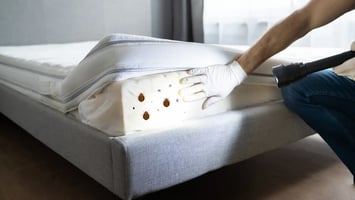
- dark spotting on sheets or mattresses
- tiny shed skins near mattress seams
- a musty odor in heavily infested rooms
Where to Check for Bed Bugs in Your Home
You should be careful of several bed bug hotspots, so you don't pick up any bed bugs and bring them home such as places with lots of people and luggage passing through. These places include hotels, train stations, public transportation, libraries, and schools. To avoid picking up bed bugs in these places, you can follow the prevention tips below.
- When staying in hotels, avoid placing luggage directly on the floor. Use a luggage rack or keep bags away from walls where bed bugs may hide.
- Check the corners of mattresses and sheets before sleeping in a hotel or other rental, as these are areas that bed bugs frequent. You can also look on the bed covers for reddish or rust-colored stains, as these indicate the presence of feeding bed bugs.
- Use a flashlight, when possible, to check seams, gaps, and cracks in both furniture and the walls. This step is important in libraries, public transport, and schools, as bed bugs are more likely to hide in these dark, secluded areas when there are no beds around to hunker down in.
How Can I Prevent a Bed Bug Infestation
In addition to picking up bed bugs in certain hotspots, you may also bring bed bugs into your home on infested secondhand items such as appliances or furniture. There are a few things you can do to find out if these items are infested with bed bugs.
- Place all secondhand items on a white sheet outside of your home after purchasing. Leave out for several hours or overnight and then check the sheet for any sign of small bed bugs or rust-colored stains, as this means an infestation is present.
- Take a flashlight and shine it on any gaps or cracks in appliances or furniture. Be sure to check harder-to-reach areas or secluded places, as these are more likely to host bed bugs.
- Use gloved hands to run your finger along furniture seams or the cracks in appliances. An infestation is likely if you knock out any bed bugs or pick up stains on your glove.

.jpg?width=1920&height=600&name=bb%20room%20(800%20x%20400%20px).jpg)
.png?height=200&name=bb%20bag%20(1).png)
%20(1).png?height=200&name=Blue%20Entrepreneur%20Personalities%20Business%20Infographic%20(1920%20x%201080%20px)%20(1).png)