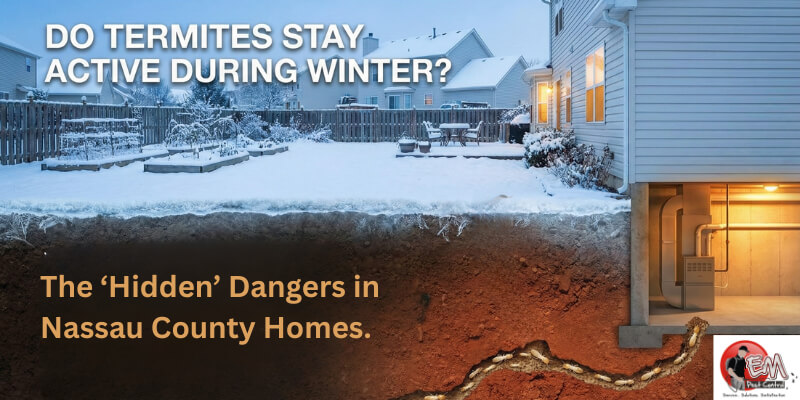
When temperatures drop, many homeowners assume pests disappear until spring. While that may be true for some insects, termites behave very differently. The Eastern Subterranean termites found across Long Island and Nassau County are highly adaptable. These wood-destroying pests remain active year-round and can continue damaging homes even during the coldest winter months.
Understanding how termites behave in winter helps homeowners identify warning signs before serious structural damage occurs.
Do Termites Die or Hibernate During Winter?
The biggest myth is that termites die off or hibernate when it gets cold. In reality, the Eastern Subterranean Termites we deal with here on Long Island are experts at survival.
When the ground freezes, termites simply move deeper into the soil to stay below the frost line where the temperature remains steady. They might slow down a bit, but they stay active. The real problem starts when they find a "shortcut" to stay warm: your home’s foundation.
Can Termites Live in Basements and Crawlspaces During Winter?
To a termite, a heated basement or a warm crawlspace in a town like Uniondale, Freeport, or Hicksville is like a 5-star resort. While the soil outside is 30°F, the soil directly under your slab or next to your foundation is kept warm by your home’s heating system.
If a colony has already found its way into your floor joists or wall studs, they will not even notice it is winter. In a climate-controlled environment, termites will continue to tunnel and feed 24 hours a day, 365 days a year. Most homeowners rarely inspect dark crawlspaces or the outer perimeter of basements during the winter, which gives termites an extended “silent season” to cause damage without being noticed.
Is Winter Termite Damage a Serious Financial Risk?
It is important to remember that termite damage is a massive financial risk. According to the National Pest Management Association, termites cause more than $5 billion in property damage each year in the United States, making them one of the most destructive structural pest homeowners face.
What Are the Signs of Termites During the Winter?
Termites are not swarming in the winter, so you will not see the winged "swarmers" until the first warm, rainy days of spring. Instead, winter activity shows up through subtle structural and moisture-related clues inside the home.
-
Mud Tubes: Mud tubes look like thin, pencil-sized lines made of soil and debris running along foundation walls, sill plates, or basement surfaces. Subterranean termites use these tubes to travel between the soil and wood while staying protected from cold air and light.
-
Stuck Windows or Doors: Homeowners often blame seasonal changes or moisture issues for doors that stick, but termite damage to the surrounding wood can also cause frames to shift.
-
Blistering Paint or Bubbling Drywall: As termites tunnel through wood, they introduce moisture. This can cause paint to blister, bubble, or peel, and drywall to appear warped or damaged. These signs are often mistaken for minor water issues, especially during winter.
-
The "Hollow" Sound: If you are doing some winter cleaning and notice a baseboard or wood beam sounds hollow when you tap it, that is a major red flag.
Why Nassau County Homes Are Vulnerable to Winter Termites
After years of serving Nassau County homes, we routinely find active winter colonies during our inspections. Many local homes have older foundations or crawlspaces that are prone to moisture, and termites love moisture as much as they love warmth. The "silent season" is when the most undetected damage occurs.
Are Termites Still Active in Winter on Long Island?
Yes. Subterranean termites remain active throughout the winter. When the soil surface becomes cold, they move deeper underground or stay inside protected areas near a home's foundation where temperatures remain stable. When termite activity usually happens out of sight, inspections help homeowners identify potential problems before significant damage occurs.

.png?height=200&name=termblog%20(1).png)
.png?height=200&name=damage%20social%20(1).png)